FOR IMMEDIATE RELEASE
Wednesday, June 29, 2015
Contact: : Lucky Sultz, Flathead Trout Unlimited. 406-755-2920, lucky@flatheadtu.org or Chris Schustrom, Flathead Trout Unlimited (406) 260-1198 chris@flatheadtu.org
Kalispell, MT. Anglers, hunters, and scientists in northwest Montana are expressing concern over proposed clear cutting projects near Glacier National Park’s northern border, in British Columbia’s portion of the North Fork Flathead River watershed.
The North Fork Flathead watershed flows in both British Columbia and Montana. It has been the focus of decades-long international agreements to protect it from inappropriate development. In particular, the Canadian portion of the Flathead provides much of the spawning habitat and clean water for bull trout in Flathead Lake, as well as being a stronghold for native cutthroat trout.
Conservationists support sustainable logging in the North Fork drainage, following modern “best management practices” that balance logging with conserving clean water, fish and wildlife.
However, observers on both sides of the border are concerned that logging planned in the BC portion of the Flathead falls well short of modern standards.
Two companies, Jemi Fibre and Canfor, hold privately owned forestland or lease government “crown” land within the watershed.
Jemi recently purchased 130,000 acres in the Flathead and Kootenai watersheds. Canfor holds the area’s provincial crown timberland under a license “tenure” agreement.
Jemi’s holdings include approximately 10,000 acres of Sportsmans Ridge, encompassing Foisey and McLatchie creeks, both major tributaries of the North Fork Flathead. According to USGS fisheries biologists, 30-40 percent of all bull trout spawning occurs just downstream of these tributaries. Bull trout are listed as threatened under the Endangered Species Act in the U.S.
Just over the ridge, the Lodgepole and Wigwam rivers contain some of the highest densities of bull trout redds (egg nests) anywhere for this imperiled species.
“The river sections immediately downstream and within Jemi Fibre’s holdings contain the most critical spawning and rearing habitats for these native fishes of Montana and British Columbia, supporting the highest densities of bull trout spawning nests in both systems”, said Dr. Clint Muhlfeld, research ecologist with the U.S. Geological Survey’s Northern Rocky Mountain Science Center stationed in Glacier National Park.
Canfor proposes to road and log the last valley bottom unroaded wildlands area in the watershed. The harvest area would require a new access bridge across the North Fork River.
Dr. Richard Hauer, Director of the University of Montana’s Institute on Ecosystems, and long-time researcher at Flathead Lake Biological Station, said implementing proper safeguards, particularly when logging sensitive streamside areas, is critically important to the long-term sustainability of the fishery.
“Poor logging practices will significantly impact water quality, and therefore the bull and cutthroat trout populations,” he said. “I am extremely skeptical of any logging so near to the premiere bull trout and cutthroat trout spawning area in the entire Flathead drainage. Data repeatedly gathered over the past 30 years has shown that a logging operation, even if conducting best management practices, cannot be done without a significant impact to water quality and the fishery. “
Local fishermen from both the Fernie, B.C., area and Montana’s Flathead Valley echoed those concerns.
“The North Fork native trout fishery is special for Montana, British Columbia, and both Canada and the United States,” said Larry Timchak, Chapter President of Flathead Trout Unlimited. “Locals have helped bring about international pressure to stop inappropriate coal mining, and it looks like we need international pressure to make sure logging is done appropriately. If Jemi logs these creeks as they’ve logged in other forests they own, the Flathead is in real trouble.”
Dennis Reghenas with the Sparwood, B.C., Fish and Wildlife Association released the following statement. “Our association does not support Jemi Fibre’s logging of Sportsmans Ridge. After witnessing the recent Jemi logging activities on their other private holdings in the Elk Valley, we do not feel they are able to harvest timber in an environmentally responsible fashion. The destruction they left behind at Nature Conservancy of Canada’s Crowsnest covenant as well as the Sulphur Springs/Fording Mountain area, shows they do the minimum, with no regard for wildlife and habitat, or the local communities.”
Canfor owns the lumber mills in the area and has agreed to take the trees Jemi cuts. Canfor is a certified timber company, which means that they log in an environmentally sustainable manner. Jemi is not certified, and has a poor record of environmental management elsewhere in British Columbia.
Jemi has not produced any environmental review whatsoever for their proposed cut on Sportsmans Ridge and is not required to provide any public plan before logging begins.



 I find it amusing that creationists take delight in criticizing various minutiae within the overwhelming and continuously verified facts of biological evolution, and yet refuse to put forth any scientific or historical proofs for their own theory. Creationist theory is entirely based on magical happenings taken from a single source that has been often debunked. If independent, demonstrable evidence for biblical creation exists why are there zero scientific sources for this miracle?
 It wasn’t the Russians. It wasn’t racism. It wasn’t Wikileaks, Fox News, Corporate Media or the FBI. We did it to ourselves.
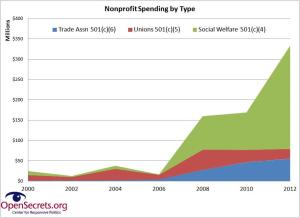 Therefore, a “social welfare” organization may fund and distribute attack ads, fund opposition research, mail issue propaganda, or organize other political activities as long as it is not their “primary activity”. How that works in the real world is that a social welfare organization (think





 The Button Valley Bugle